An AI that learns — and shows its working
Most AI music tools are frozen on the day they shipped. Polaris is not. It learns technique from what you give it, and it learns how you produce — and everything it learns is written down where you can read it.
It learns technique
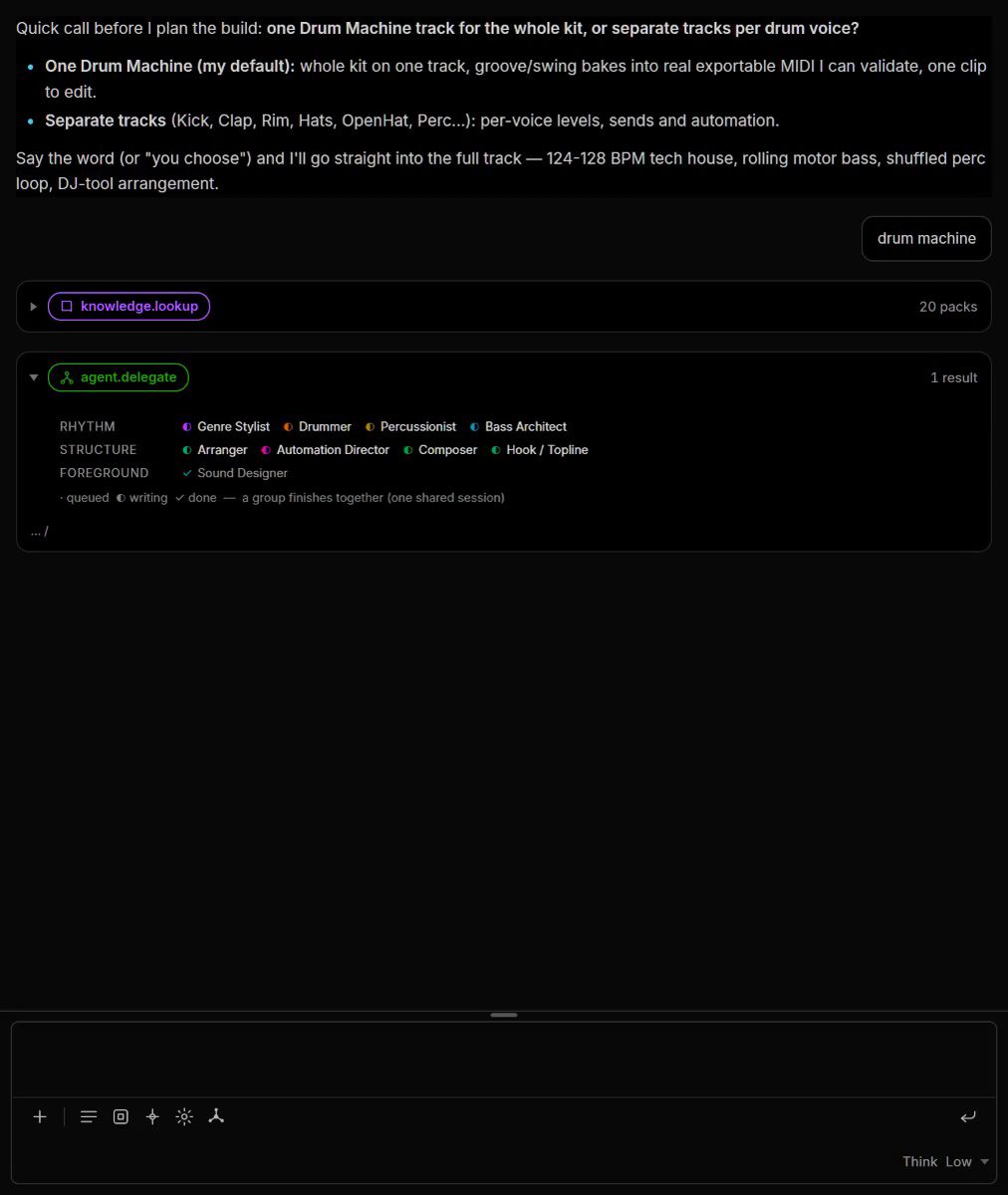
Point Polaris at a web page, a YouTube video or a document. It reads the text, distils the technique down to what is actually usable, and saves it under a topic name its agents can find later.
That much is common. What is not common is the paperwork.
Every note carries its source
A saved note is never an anonymous fact. It records where it came from and how far it should be trusted, on a fixed ladder:
- Highest — you told it.
- High — it measured the audio itself.
- Medium — a reference document.
- Low — something it read on the web.
- Lowest — a video transcript.
The rank is decided by where the claim came from, never by the AI grading its own confidence. A model cannot promote its own guess.
Notes have versions, not overwrites
Save the same topic twice and the note does not silently change underneath you. It gains a revision number and a dated line in its own change log, so you can see what it used to believe and when that changed.
Facts that go stale say so
Anything time-sensitive gets a review date, ninety days out. When that date passes, Polaris offers to refresh the note. It does not go and re-research on its own, and it does not quietly keep serving something out of date.
It learns you
The second kind of learning is about you rather than the craft.
Polaris studies your own finished projects and builds a profile of how you work: the tempos you settle on, how heavy your drums sit, how you arrange, what you reach for. Keep as many profiles as you like — one per alias, one per label, one per era. Compare two of them side by side. Tell Polaris which one to lean on for the track in front of you, and how hard.
None of this leaves your machine. The profile is built from your projects, on your computer, for you.
Your library and the factory library stay apart
What Polaris learns is kept separate from the technique packs it shipped with, so a note you added can never quietly overwrite the reference material the agents are built on. Both are readable. Neither is a black box.
Why it matters
An AI that cannot learn gives the same answer in year three as it did on day one. An AI that learns but hides its sources is worse — you cannot tell a measured fact from something it half-read in a forum.
Polaris does both jobs in the open: it gets better, and it shows you exactly why it believes what it believes.
Read next
An AI that listens — how Polaris judges its own work by ear. Or the knowledge it ships with: 244 written technique packs.